What Are Belleville Washers?
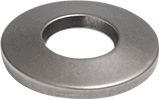
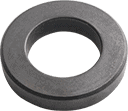
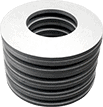
Also known as coned-disc springs or cupped spring washers, these parts have a conical shape with a hole in the middle and can be loaded either statically or dynamically. Their cup-like shape provides several benefits, including:
- Configurability via stacking (parallel stacks, series stacks, and parallel/series stacks)
- Strong load and deflection capabilities
- Concentric force distribution
- High force in small spaces
Typically, a washer will be used to evenly distribute clamping force from a threaded fastener over a wider area, which is necessary for electrical conductivity. Also, a Belleville washer can absorb shock and keep the fastener tight.
Electrical Connections and Metallurgic Thermal Expansion
To fully grasp the importance of material input quality, we need to first review the relationships between metals and electricity.
Typically, an electrical connection will be composed of different types of metals—each one will have its own thermal expansion coefficient. That means when the temperature increases or decreases, the various metals will experience changes in volume (expansion or contraction) at different rates.
For instance, the thermal expansion coefficients for copper and aluminum for each centigrade degree increase are 17∙10E-6 and 23∙10E-6, respectively. So, aluminum will experience 35% more thermal expansion than copper.
Why does that matter?
Put simply, the difference in thermal expansion can threaten the structural integrity of the electrical connection. With certain pieces expanding faster than others, the load on the bolt may increase, which, in turn, causes the joint components to loosen.
A reduced bolt load leads to increased electrical joint resistance, which could result in minor issues like hot spots or even major problems like the catastrophic failure of the electrical system.
The Crucial Role of High-Quality Belleville Washers in Electrical Connections
One of the most important functions for Belleville washers is to properly secure electrical fasteners. However, their efficacy is highly contingent on the quality of materials.
When it comes to electrical systems that experience massive temperature swings, you can’t just use any old Belleville washer. The materials matter. It needs to be designed to meet the electrical power transmission and distribution requirements of that specific application.
For example, a circuit breaker will likely have different size, material grade, and finish requirements from a busbar.
The right Belleville washer—one made of materials that are up to spec—makes it possible to maintain a consistent load on the joint at all times, no matter where the electrical system may be in its thermal cycle. This promotes safety and power efficiency.
American Belleville: Quality That Matches Function
A Belleville washer may be small, but it can have an enormous impact on electrical connections. However, to be as effective as possible, the washer materials must align with the job requirements.
That’s where American Belleville makes the difference. Our washers are designed with the characteristics and materials needed to meet the demands of your specific electrical application. Common applications for our high-quality washers include:
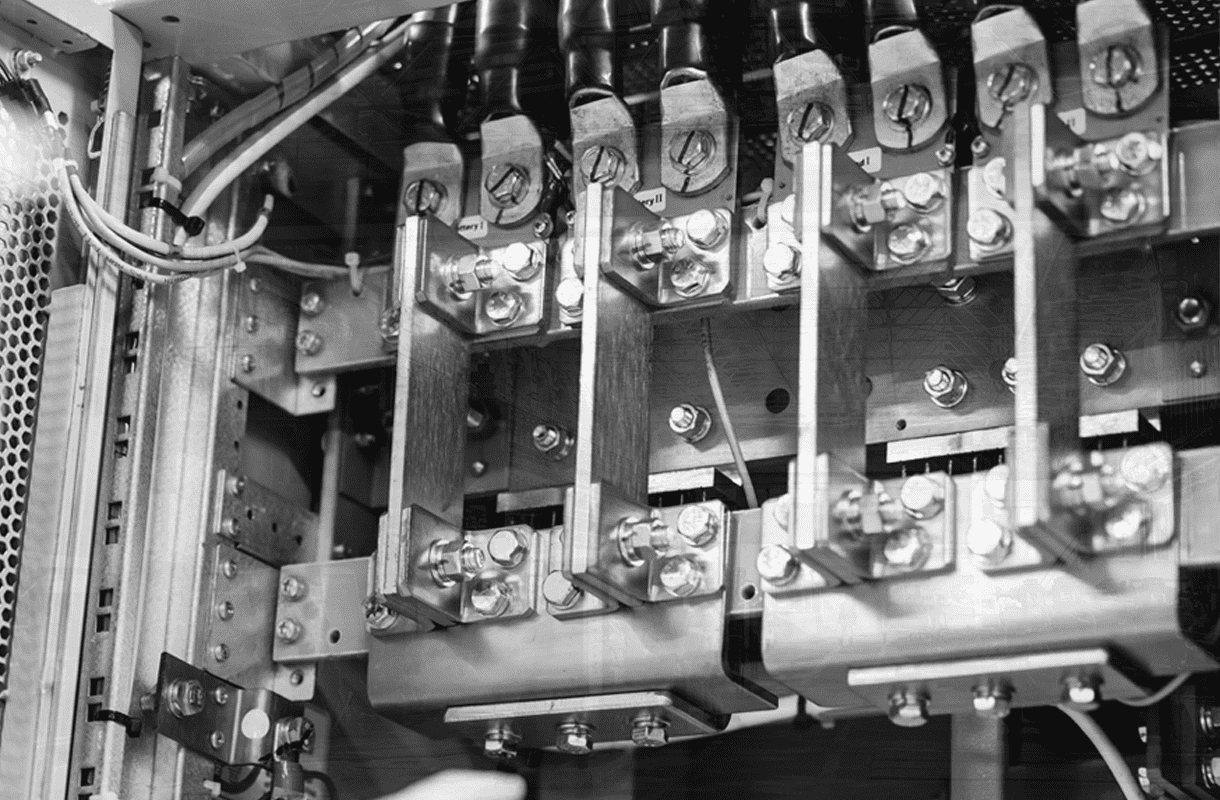
- Busbar and Switchgear
- Circuit Breakers
- High Voltage Rectifiers and Semiconductors
- High Voltage Transmission Lines
- Pole Line Hardware
- Substations
- Tensioning Cable Support Assemblies
Whatever your magnetism requirements, working temperature, or corrosive environment, our parts are made to withstand your most powerful electrical connections.