However, power distribution isn’t just about keeping the lights on. It also affects energy efficiency, heat management, and how easily a facility can scale as compute demand grows. A well-designed data center power distribution system reduces resistance losses, limits arc-flash risk, and gives engineers room to add capacity without rebuilding the electrical backbone.
Traditional Data Center Power Design
Components of Data Center Electrical Systems
Classic data center electrical systems follow a familiar stack: utility service entrance, medium-voltage switchgear, step-down transformers, low-voltage switchboards, and busway or cable runs to the floor. Because redundancy is standard practice, most facilities duplicate this stack across an A-side and B-side feed.
Overview of Data Center Electrical Equipment
Data center electrical equipment includes circuit breakers, automatic transfer switches, uninterruptible power supplies, and power distribution units. Each piece depends on bolted terminations to stay connected to the busbar or cable lug beneath it. If those terminations loosen, the equipment can be in perfect working order and still fail at the connection point.
Role of Electric Connections
An electric connection is only as good as the clamping force holding it together. Bolted joints rely on that force to maintain metal-to-metal contact. Contact quality directly determines resistance, heat buildup, and long-term reliability.
Limitations of Conventional Power Systems
Standard flat washers and lock washers can’t solve a specific engineering problem: thermal cycling. As current flows and stops, connected metals expand and contract. Vibration from HVAC systems and rotating equipment adds to that movement. Over thousands of cycles, bolt tension gradually relaxes — and a connection loosens long before anyone notices.
Innovations in Power Distribution Systems
Introduction to Belleville Washers
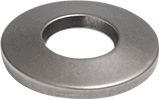
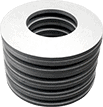
Belleville washers are cone-shaped disc springs that flex slightly under load. Instead of sitting flat like a standard washer, a Belleville washer compresses and maintains spring pressure on the joint. That spring action keeps clamping force consistent even as the surrounding metal expands and contracts.
Benefits of Using Belleville Washers in Power Systems
A Belleville washer maintains spring tension instead of relying on a fixed, rigid clamp. Because of that, it keeps applying contact force through thermal cycling and vibration. The result: fewer loose connections, less unplanned maintenance, and lower risk of arc-flash events from degraded contact resistance.
For busbar and terminal block connections specifically, this makes a real difference. A joint with the wrong hardware needs re-torquing every few months. A joint with the right hardware can hold for the life of the installation.
Evolving Trends in Data Center Power Management
Efficient Data Center Power Design
Modern data center power design increasingly treats connection hardware as a reliability variable, not an afterthought. Engineers now specify disc spring washers at the design stage instead of adding them after a failure. The upfront cost is small compared to the cost of an outage.
Integration of Data Center Busbars
A data center busbar carries substantial current across long runs. Every tap-off point forms a bolted connection under continuous thermal load. Because busbars flex slightly with temperature changes, those joints benefit the most from spring-loaded hardware that self-compensates for the movement.
Exploring Different Types of Electrical Connectors
So what are the different types of electrical connectors used in this environment? Lug connectors, splice connectors, busbar connectors, and terminal blocks each serve a different role. All of them, however, depend on a bolted or crimped joint to maintain conductivity.
Material Composition of Electrical Connectors
What are electrical connectors made of, generally? Most combine a copper or copper-alloy conductor for low resistance with a plated finish — tin, silver, or nickel — to resist corrosion. Manufacturers typically choose steel or stainless steel for the washers and fasteners that secure those connectors, based on the spring properties and load tolerance the joint requires.
Future Prospects and Best Practices
Predictions for Data Center Electrical Design
Data center electrical design will keep prioritizing uptime and faster deployment. As a result, expect more facilities to standardize on disc spring hardware in new builds instead of retrofitting it after maintenance issues appear. Predictive maintenance tools that monitor connection temperature will likely pair with this hardware, flagging joints before they fail rather than after.
Recommendations for Implementing Innovative Solutions
For facilities upgrading existing data center power systems, start with the highest-current, highest-cycling connections. That typically means busbar taps and main breaker terminations, because thermal cycling does the most damage there over time.
Case Studies of Successful Implementations
Data center operators who’ve replaced standard hardware with Belleville washers at critical busbar and terminal block joints report fewer re-torque maintenance visits. They also see more stable connection temperatures during load testing. These aren’t isolated results — they reflect the same physics at work in any facility with significant thermal cycling on its electrical connections.
Talk to American Belleville About Your Data Center Connections
If your facility relies on busbars, terminal blocks, or other bolted electrical joints that go through constant thermal cycling, the washers holding those connections together matter more than most spec sheets suggest.
Contact our team to talk through your data center power distribution project, get help specifying the right disc spring washer for your application, or request samples for testing.