Home » Blog » Installing Belleville Washers in Electrical Connections
Why Use Belleville Washers for Electrical Connections?
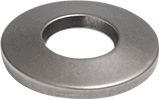
Belleville washers, also known as disc springs, are engineered to provide high spring force in a compact form. Their unique conical shape generates an elastic force that compensates for changes in joint thickness, making them ideal for applications like busbar assemblies, circuit breakers, and pole line hardware.
Step-by-Step Installation Guide
- Select the Right Washer:
Choose a Belleville washer with the appropriate size, material grade, and finish for your specific electrical application. American Belleville offers a wide range of options tailored for various environmental conditions.
- Inspect Mating Surfaces:
Ensure that the connecting surfaces are clean, flat, and free of debris. This helps create a stable and effective connection.
- Correct Orientation:
Install the Belleville washer with the convex (rounded) side facing away from the nut or bolt head. This orientation allows the washer to compress properly, maintaining optimal clamping force.
- Stacking Configurations:
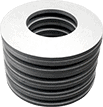
For applications requiring higher loads, Belleville washers can be stacked in parallel (same orientation) for increased force or in series (alternating orientation) for increased deflection.
- Torque to Specifications:
Use a calibrated torque wrench to tighten the fastener to the specified torque value. Over-tightening can cause washer damage, while under-tightening may result in a weak connection.
- Regular Maintenance:
Inspect the connections periodically to ensure the washers remain effective, especially in high-vibration or temperature-fluctuating environments.